Knowledgebase / Safety and storms
Is Your Garage Door Storm Ready? Wind Ratings and Storm Checks on the Sunshine Coast
The Sunshine Coast is in wind region B1, which isn't cyclonic. Until 1 May 2027, the building code names the garage door wind standard, AS/NZS 4505, for region B, which takes in B1. Big storms blow doors in or out here. Before summer, look for a wind rating label and fix worn parts. Never run a buckled door.
Checked 23 September 2026
Sunshine Coast only. Based in Maroochydore. 7 days, 6am to 6pm, with 24/7 emergency callouts.
Question 01
Is the Sunshine Coast a cyclone area?
Not under the building code. Queensland Government guidance puts the Sunshine Coast in wind region B1, along with Brisbane and the Gold Coast. The cyclonic region, called C, covers the coast north of Bundaberg. That doesn't mean cyclones never reach us. Alfred, a former tropical cyclone, crossed Bribie Island, just south of Caloundra, in March 2025.
Australia is split into wind regions, and the building code uses them to set how strong a house has to be. A 2023 guide from the Cyclone Testing Station and the Queensland Government names the Sunshine Coast, Brisbane and the Gold Coast as wind region B1. It puts Rockhampton, Townsville and Cairns in region C, the cyclonic one. The Queensland Reconstruction Authority's cyclone guide draws the line at Bundaberg. It's written for homes near the coast north of there, but its garage door advice still helps here.
Region B1 isn't a calm zone, though. The 2023 guide says the design winds for regions B1 and B2 come from severe thunderstorms and tropical cyclones. The Bureau of Meteorology's report on Alfred says it brought damaging winds to south-east Queensland, with widespread power outages and some structural damage. Many parts of the Sunshine Coast went under water too.
So for your garage door, plan for summer storms every year and the odd cyclone. Both push a door hard.
Question 02
What does a wind rating on a garage door mean?
It means the door has been tested to hold up against a set wind load. In Australia that test sits in AS/NZS 4505, the standard for garage doors and other large access doors. A rated door is matched to a wind class, such as N2 or N3 for non-cyclonic areas, or C1 to C4 for cyclonic ones.
The Queensland Government's garage door factsheet says the AS/NZS 4505 test simulates the wind loads of a severe weather event. It also says that before the current standards, many garage doors weren't reinforced and couldn't handle those wind pressures.
Newer homes are given a wind class of their own. Homes built before the 1990s may not have one. QRA's cyclone guide lists what sets it: the wind region, how close the house is to open water or open country, whether it's on a hill, and whether other buildings shelter it. An engineer, builder or building certifier works it out. Steel-Line's wind-rated roller door brochure sums up the classes. N1 to N6 are for non-cyclonic regions, C1 to C4 are for cyclonic ones, and a higher number means a stronger design wind.
| Term | What it means | Where you'll see it |
|---|---|---|
| AS/NZS 4505 | The Australian and New Zealand standard for garage doors and other large access doors. It includes a wind test. | On a rated door's label or paperwork |
| Wind region B1 | A region that isn't cyclonic. Design winds here come from severe thunderstorms and tropical cyclones. | The Sunshine Coast, Brisbane and the Gold Coast |
| Wind region C | The cyclonic region | The Queensland coast north of Bundaberg |
| N1 to N6 | Wind classes for non-cyclonic areas. A higher number means a stronger design wind. | Building plans and door labels outside cyclone regions |
| C1 to C4 | Wind classes for cyclonic areas | Building plans and door labels in regions C and D |
| Wind locks | Clips on the edges of a roller door that lock into its side guides, so wind can't easily pull the door out | A common feature of wind-rated roller doors |
Question 03
Why do garage doors fail in strong wind?
Wind pushes hard on a door that faces it and sucks at doors on the other sides of the house. Roller doors bend a long way, and the bowing can pull them out of their side guides. Once the door goes, wind rushes into the house. The Cyclone Testing Station says that can make the roof and walls fail.
QBCC's cyclone guide, written by the Cyclone Testing Station, lists garage doors blown in or out among the most common kinds of wind damage to houses. The station's bulletin on roller and sectional doors explains how it happens. Being pulled out of the guides is the most frequent way roller doors fail. The guides can also tear away from the frame they're fixed to.
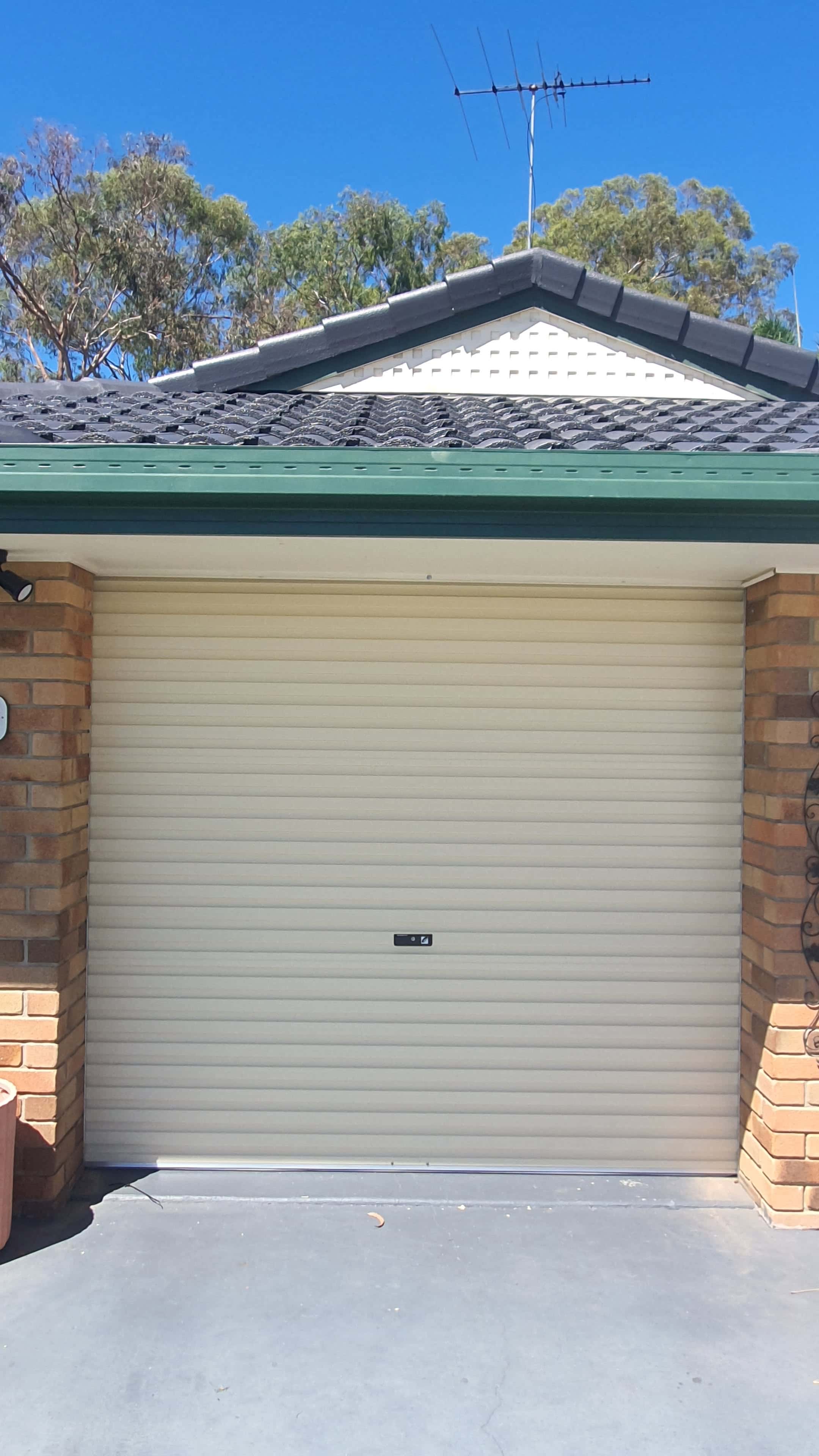
Wind locks deal with the first problem. They hold the edges of the curtain inside the guides. Steel-Line's wind-rated roller door, for example, has a moulded lug on the curtain that locks into a shaped side guide.
Worn and rusty parts make it worse. The QBCC guide lists corroded fasteners among the common causes of wind damage and says the risk of corrosion is higher near the coast. Here, that's a lot of us.
Question 04
Does a Sunshine Coast home need a wind-rated garage door?
Under NCC 2022, which Queensland uses until 1 May 2027, garage doors in openings up to 3 m in wind region B, C or D must meet AS/NZS 4505. That takes in the Sunshine Coast. NCC 2025 then narrows it to B2, C and D, and B1 drops out. Either way, doors here stay vulnerable unless strengthened.
You can read the rule in the NCC 2022 Housing Provisions and the NCC 2025 version. Both cover garage doors in openings up to 3 m high. NCC 2022 lists wind region B, C or D, and only Western Australia's version cuts that back to C or D. NCC 2025 lists region B2, C or D. The ABCB's adoption table shows Queensland starting NCC 2025 on 1 May 2027.
The code isn't the whole story, though. The Cyclone Testing Station and Queensland Government guide says garage doors in wind regions B1 and B2 remain vulnerable unless extra strengthening is added. A 2010 Cyclone Testing Station bulletin notes fairly frequent reports of newer buildings outside cyclone regions failing in thunderstorm winds, usually because a door gave way.
For an existing door, QRA's cyclone guide gives two ways to make it stronger. Replace it with a door that meets AS/NZS 4505, or fit certified temporary braces made for the door you have. It also says the garage walls sometimes need strengthening to carry the extra load from a wind-rated door. That's building work to plan well ahead of storm season.
The Queensland Government's Household Resilience Program helps pay for wind-rated garage doors, but only for eligible homes in coastal parts of Central and Northern Queensland. Garage door installation explains what fitting a new door involves, and garage door types compares roller, sectional and tilt doors.
New doors from Deadlock: Only work valued at $3,300 or less.
Question 05
How can I tell if my garage door is wind rated?
Look for a label first. A rated door can carry a label that names AS/NZS 4505 and its wind rating. Then check your paperwork, because QRA's cyclone guide says a home's wind class should be marked on its building plans or contract. No label and no paperwork? Plan as if the door isn't rated.
- Check the door itself. Look on the inside face, along the bottom and on the side tracks for a sticker or plate. Look for one that names AS/NZS 4505 or a wind class such as N3.
- Look at the edges of a roller door. Clips fixed along the curtain's edges that sit inside shaped guides are wind locks.
- Dig out the paperwork. The builder's handover folder, the door's manual or the building contract may name the door model and your home's wind class.
- Ask the door's maker. With the brand and model number, they may be able to tell you what it was rated to.
A missing label doesn't prove the door is unrated. The Cyclone Testing Station notes the label in the 1998 version of the standard was optional, so a door could meet that version without one. You just can't count on a rating you can't see.
If your door is rated, keep it that way. Steel-Line's installation guide for its wind-braced sectional door says every part supplied is designed for that door, and swapping or adding parts may affect how it performs. So repairs on a rated door should use parts made for it.
Question 06
How do I get my garage door ready for storm season?
Do it in spring, before the first big storm. Get Ready Queensland warns that severe storms can build fast, with little warning. Run the door and watch it, check the tracks and fixings, look over the seals, test the manual release and clear the driveway. Book a service if anything's loose or noisy.
- Run the door and watch it all the way. It should move smoothly and close square to the floor. Jerky, noisy, slow or crooked means something needs attention.
- Check the tracks and brackets. Look for loose bolts, bent tracks and rust. Get Ready Queensland says to fix loose or broken fittings and corrosion before severe weather.
- Check the seals. Get Ready Queensland also says to check doors for broken seals. A torn bottom seal lets wind-driven rain in under the door.
- Look at the springs and cables, but don't touch. A frayed cable, a gap in a spring or a door that's gone heavy needs a technician. See what to do when a spring breaks.
- Test the manual release with the door shut, so you know how it works before a blackout. Opening a garage door manually walks you through it.
- Clear the driveway and yard. Bins, pot plants and outdoor furniture can turn into flying debris, and the QBCC guide says flying debris breaks doors and windows.
- Check the safety reverse. Safety sensors and auto-reverse shows the monthly test.
A garage door service covers the hardware tightening and the spring, cable and roller checks in one visit. Near the beach, rust gets into fixings sooner, so it's worth booking before summer. The salt air guide covers rinsing and rust.
When a severe storm or cyclone warning comes out, keep the door fully shut. An open door lets wind straight into the garage and the house. If you have a certified brace made for your door, fit it the way the maker says. Some people back the car up against the inside of the door instead. The Cyclone Testing Station says that does little to stop a door blowing outward.
Question 07
What should I never do with a storm-damaged garage door?
Never run a door that's buckled, bowed, off its tracks or hanging crooked. Don't pull the manual release on it, and don't try to force it straight. The springs still hold the door's weight under high tension, so a damaged door can drop or twist without warning. Keep everyone clear and call.
- Don't press the remote or wall button to see if it still works. The opener can drag a jammed door further out of shape.
- Don't pull the release cord on a door that's stuck open or out of its tracks. It can come down hard.
- Don't hammer panels flat or push a roller door's curtain back into its guides.
- Don't touch the springs, cables or bottom brackets. Steel-Line's installation guide warns they're under strong tension, and loosening their fasteners risks serious injury.
- Don't stand under a door that's stuck part open, and keep kids and pets out of the garage.
- Stay well away from fallen powerlines. Energex says to stay at least 10 metres away and call Triple Zero (000).
Question 08
What should I check after a storm?
Look before you touch. From a safe spot, check the door is straight and fully closed, the panels or curtain aren't bowed, and nothing's hanging loose. Take photos. If it all looks right, run the door once and watch it the whole way. If anything seems odd, stop and book a repair.
- Check the area first. Look for fallen powerlines, trees or debris against the door before you go near it.
- Look at the door from outside. Dents, bowed panels, a curtain pulled out at the sides or a gap under one corner all point to damage.
- Look from inside, if you can get in another way. The tracks should be straight, the brackets tight to the wall and the cables sitting on their drums.
- Take photos before anything's moved, in case you claim on insurance. Dented garage door repair covers claims.
- If it all looks right, run the door once and watch it the whole way. Noise, shuddering or a crooked close means stop.
- No power? Use the manual release only on a door that's shut and undamaged.
The QBCC cyclone guide suggests having your house checked after cyclonic winds, even if it seems to have come through fine. The same goes for the door. Wind can loosen fixings and kink a track without much to see from the driveway.
Thom repairs existing doors right across the Coast, from Mudjimba and Marcoola down to Currimundi. For a door that's stuck or unsafe tonight, see 24/7 emergency garage door repairs. For everything else, garage door repairs explains what he fixes, or you can book a callout.
Repairs and servicing are booked as a callout valued between $200 and $300 depending on the door size and the labour involved. Every job is done by Thom, who has 3.5 years of hands-on experience and has trained across multiple garage door brands and systems.
On the Sunshine Coast
On the Sunshine Coast
Summer storms bring damaging winds here, and now and then a cyclone comes close. Ex-cyclone Alfred crossed Bribie Island in March 2025 and brought damaging winds and power outages across the south-east. Homes on beachfront streets in Mudjimba, Marcoola and Currimundi sit closest to open water, which QRA's cyclone guide says means stronger winds. The salt in that wind rusts fixings and tracks sooner too. The same guide says buildings around a house shelter it, so a home on a new estate block with few neighbours yet can cop more wind than one in an older street. Thom is based in Maroochydore and takes 24/7 emergency callouts across the Sunshine Coast.
Quick answers
More questions people ask
Wind region B1. A 2023 guide from the Cyclone Testing Station and the Queensland Government puts the Sunshine Coast, Brisbane and the Gold Coast in B1. The cyclonic region, C, starts north of Bundaberg. B1 still gets severe thunderstorms and the odd cyclone, so doors here can take a beating. A garage door service before summer catches loose fixings and worn parts early.
Cyclone classes are for cyclonic regions, which the Sunshine Coast isn't. A wind rating is another matter. Under NCC 2022, which Queensland uses until 1 May 2027, garage doors in openings up to 3 m in wind region B, C or D must meet AS/NZS 4505. That takes in the Sunshine Coast. From 1 May 2027, NCC 2025 narrows it to B2, C and D, and the Sunshine Coast's B1 drops out. Garage door types explains how roller, sectional and tilt doors differ.
It depends on the door's rating. A rated door is tested to AS/NZS 4505 for a wind class, such as N3 or C2, and a higher number means a stronger design wind. In cyclone areas, QRA's guide puts the design wind speed for class C1 at 180 km/h and for C4 at 310 km/h. An unrated door has no set figure, and the Queensland Government says many older doors weren't reinforced for severe weather. Book garage door repairs if yours already flexes or rattles.
Roller doors are flexible. The Cyclone Testing Station says they bend a long way under wind before they fail, and that bowing can pull the curtain out of its side guides. A door that rattles more than it used to may have loose guides, worn fixings or rust. Get it checked before storm season. Thom services roller doors in beachside streets like Marcoola.
Only with a brace made and certified for your door. Queensland Reconstruction Authority guidance lists certified temporary braces as a way to strengthen an existing door when a cyclone is coming. Fit it exactly as the maker says, and never loosen anything on the springs, cables or bottom brackets. They're under high tension. If the door is already damaged, call about 24/7 emergency garage door repairs.
Only if it looks straight, sits in its tracks and nothing's hanging loose. Check from a safe spot first, and stay at least 10 metres from any fallen powerlines. If it looks right, run it once and watch it all the way. If it's buckled, jammed or crooked, don't run it or pull the release. Call for 24/7 emergency garage door repairs instead.
It's a roller door with wind locks, which are clips along the edges of the curtain that lock into shaped side guides. They stop strong wind pulling the curtain out of the guides, the most common way roller doors fail in storms. Steel-Line's wind-rated roller door works this way. See garage door types for how roller doors compare with sectional and tilt doors.
Sources
- 01Cyclone Testing Station and Queensland Government: Technical guidance document, assessment of buildings as a place of refuge for cyclones (2023)Checked 23 September 2026
- 02Queensland Reconstruction Authority: Cyclone Resilient Building Guidance for Queensland Homes (December 2019)Checked 23 September 2026
- 03Queensland Reconstruction Authority: Cyclone and Storm Tide Resilient Building Guidance for Queensland HomesChecked 23 September 2026
- 04Queensland Government: Household Resilience Program, Garage doors factsheet (effective June 2026)Checked 23 September 2026
- 05QBCC: Is your house prepared for a cyclone? (Cyclone Testing Station, updated November 2011)Checked 23 September 2026
- 06Cyclone Testing Station, James Cook University: Information Bulletin 4, Wind resistance of external overhead roller and sectional doors (2010)Checked 23 September 2026
- 07ABCB: NCC 2022 ABCB Housing Provisions, Part 2.2 Structural provisions (clause 2.2.4)Checked 23 September 2026
- 08ABCB: NCC 2025 ABCB Housing Provisions, Part 2.2 Structural provisions (clause 2.2.4)Checked 23 September 2026
- 09ABCB: NCC 2025 state and territory adoption informationChecked 23 September 2026
- 10Bureau of Meteorology: Severe Tropical Cyclone Alfred (22U)Checked 23 September 2026
- 11Get Ready Queensland: Storm, know your riskChecked 23 September 2026
- 12Get Ready Queensland: Protect your homeChecked 23 September 2026
- 13Energex: Power outage safetyChecked 23 September 2026
- 14Steel-Line Garage Doors: Next Generation Wind Rated Roller Doors brochureChecked 23 September 2026
- 15Steel-Line Garage Doors: Wind Brace Sectional Door Installation GuideChecked 23 September 2026

Who does the work
Thom, Sunshine Coast garage door technician
Thom owns and runs Deadlock Garage Doors from Maroochydore and does the work himself, from servicing to spring and motor repairs and 24/7 emergency callouts across the Sunshine Coast.
- 3.5 years hands-on with garage doors
- Trained across multiple garage door brands, systems and businesses
- Owner-operator: every job is done by Thom
- Fully insured (public liability)
- ABN 17 937 699 636
Where Thom can help
Book the work on the Sunshine Coast
Local service
Garage door service near you
Knowledgebase
Related answers
- How to Open a Garage Door Manually (and Lock It Again)Power out or opener dead? How to open a roller or sectional garage door by hand, from inside or outside, then re-engage and lock it safely.Updated 23 September 2026
- Dented Garage Door? Repair the Panel or Replace the DoorReversed into the garage door or hit by hail? When a dent can be fixed, when the door needs replacing, and what to gather for an insurance claim.Updated 23 September 2026
- Broken Garage Door Spring or Cable? What to Do Right NowHeard a loud bang and the door won't lift? What to do when a garage door spring breaks or a cable snaps, what not to touch, and when to call 24/7.Updated 23 September 2026
Time for a garage door service?
Repairs and servicing are booked as a callout valued between $200 and $300, depending on the door size and the labour involved. Sunshine Coast only. Based in Maroochydore. 7 days, 6am to 6pm, with 24/7 emergency callouts.